

Queering Slavery
Eunuchs, harems and pearl-diving through a decolonial lens

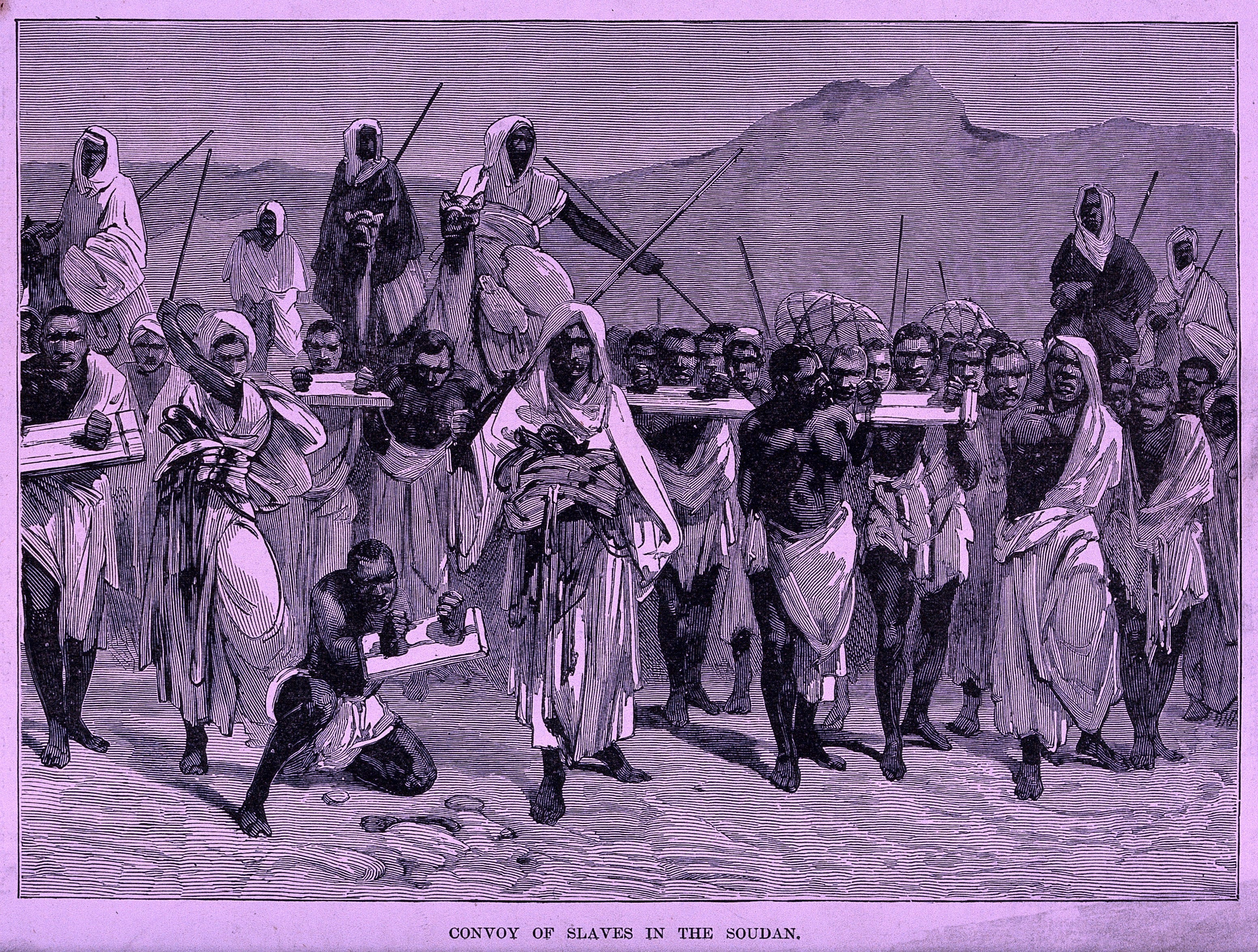
History isn’t complicated if you politicize it. I just read Justin Marozzi’s Captives and Companions: A History of Slavery and the Slave Trade in the Islamic World (2026), in which he implies there’s an imbalance when 95% of scholarship on slavery focuses on the transatlantic trade and American plantation system. He acknowledges it can be divisive to speak about this topic when it relates to Muslims but for me it’s not a matter of whataboutery. It’s about queering normativity and reimagining enslavement in non-Western cultures as liberating. Myriad contemporary clerics, from Egypt and Kuwait to ISIS, have proudly reminded us that slavery is a virtue of Islam and crucial to jihad. So everyone should stop judging.
Since it is haram for Muslims to be slaves, the book covers the diverse ways they made this lifestyle possible for millions upon millions of others. Under the original Arab Conquest as well as the Mamluk and Ottoman Empires, emancipation after years of service created demand in every generation for fresh raids in Africa, Asia and Europe. Think of it as the abundance of noncolonial anti-capitalist economies intersecting across continents.
I was particularly interested in two classes of captives: eunuchs and concubines. The reader will note how I refrain from calling them enslaved people, an unnecessary term when referring to queer folx or anyone else conducting forced labor under non-Western systems. For thousands of years eunuchgenders enjoyed serving in courts while also enduring the transphobic envy that arose when they amassed wealth and power under a king or sultan’s patronage. They might have screamed when they were recruited from their villages and watched their fathers get slaughtered and their mothers and sisters get raped—and they might have screamed even harder when they underwent the gender-affirming care between the ages of six and twelve—but they were grateful to be among the 10-30% to survive these life-saving procedures. Carrying a silver quill-cum-catheter in one’s turban was just one of the creative ways in which a eunuch at the Topkapi Palace might handle any resulting problems with their internal plumbing. Also, it wasn’t because they no longer had testicles or penises that made them less of a threat to royal female sex workers. It was because they were nonbinary and therefore more evolved than the rest of society.
The most inspiring example of this inclusive culture goes back to the 10th Century when the great caliph Muqtadir had no fewer than 7,000 Black and 4,000 white eunuchs to guard the 4,000 women in his harem. I know some Muslim leaders eventually caved to the moralizing imperialism of Westerners and declared slavery to be against Islam, but one can’t help but rue the demise of the 700 sable-cloaked Black eunuchs who once guarded the Prophet’s tomb in Medina, while today barely a handful survive.
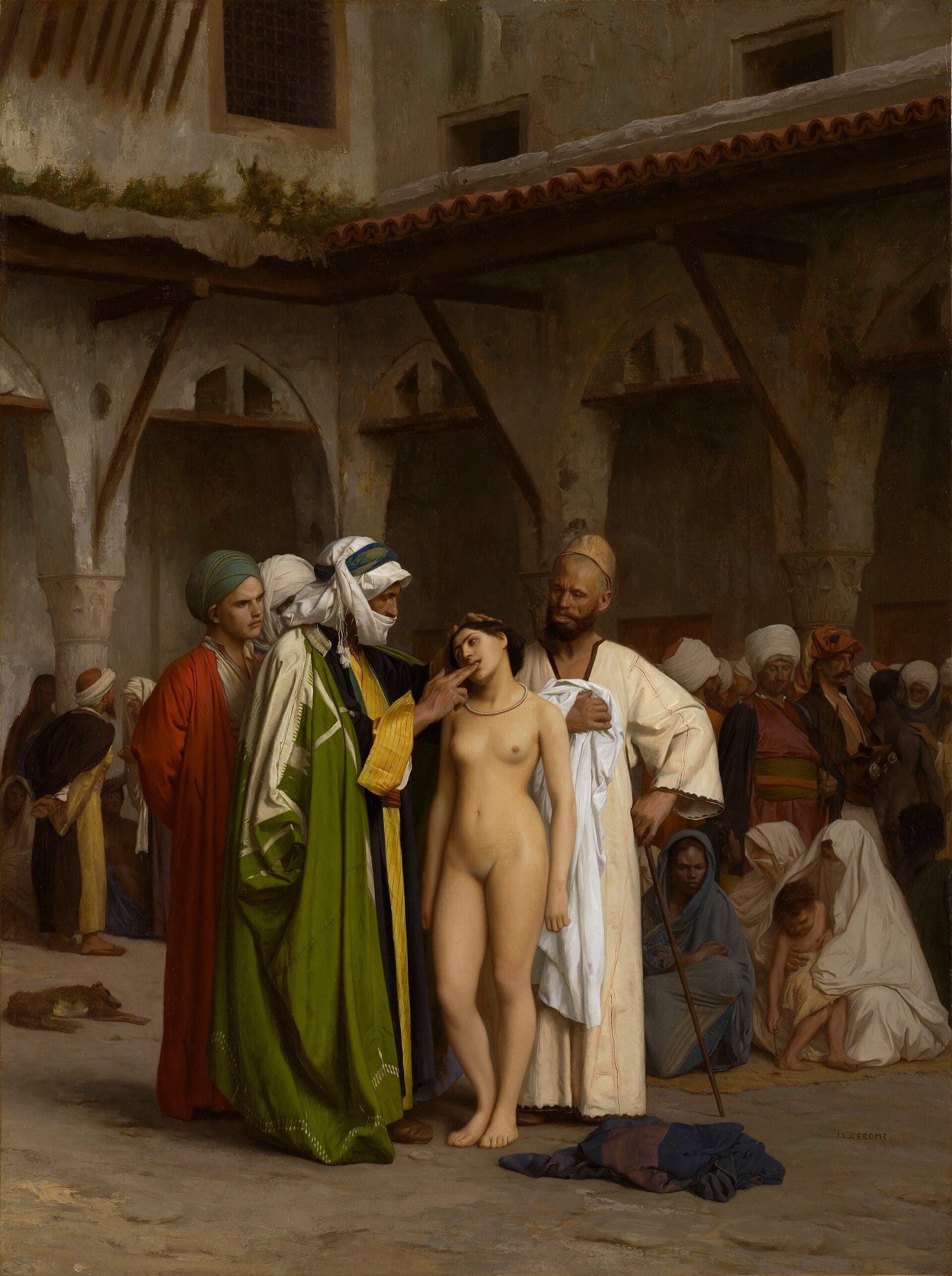
On concubines, Mazzoni notes how high-minded European abolitionists could be, especially when it came to “innocent” cis women. The rampant Orientalism of 19th Century painters as they otherized the sellers and buyers of nude Caucasian females is abhorrent. See below how Jean-Léon Gérôme insinuates depravity in the Arab’s inspection of the subject. The guy likes what he likes, respectfully wears a Covid mask, and probably wants to make sure her teeth aren’t going to harm his member. Enough with the preciousness over this display of non-toxic masculinity!
Women actually loved being in harems. They got to sing and hang out, and if some of them in the 8th Century ended up beheaded for having lesbian affairs others got to dress up as eunuchs to ensure that the sultan’s same-sex-attracted son could mature beyond genital fetishism. The remarkable Leyla Hanim (1850-1936) spent most of her childhood in the imperial harem and grew up to write about how blue-eyed Circassian slaves could bring punishment upon themselves by making their mistresses jealous because their husbands found them more desirable. Hanim alternatively compared Negresses to exotic toys and found the intelligence of forty of them would barely fill a fig, LOL. Turks and Arabs tended to prefer Black women as domestic slaves (they were just better at it), so it was heartening to read how Hanim’s father bought her one at a discount.
As European racists cracked down on the slave trade, several savvy women sought to outsmart them. One sultan’s mother preferred white refugee girls but scooped up some Africans as well by using her privilege to intercept undercover ships and get the best ones before anyone else could. A side note on this Pertevniyal: when her son escorted the French Empress Eugénie to meet her in the royal harem, she slapped the uppity kafira in the face. You couldn’t after all let a woman who wasn’t his property touch the sultan. A few decades later a multiethnic team of girl bosses collaborated in trafficking Bulgarian girls whose families had lost their homes in the Russo-Ottoman war. Marozzi put a negative spin on their business model but antiracists like me see this as honest entrepreneurialism.
Marozzi’s book does teem with illuminating tidbits. I never realized the reason so many captured girls didn’t make it across the Sahara with their hymens intact was because the caravan drivers and imams believed virgins cured venereal disease. There are so many different ways of knowing. I also wasn’t aware that in the early 20th Century the Islamic-revivalist Sokoto Caliphate (a.k.a. Fulani Empire) enslaved 50% of its population, or that the 14th Century Moroccan explorer Ibn Battuta married and divorced over twenty women and fathered and abandoned seventy children during his travels. One can complain that 25-80% of slaves died during the trans-Saharan treks, but clearly people needed and appreciated the ones who survived.
I was shocked but not surprised to learn how Europeans culturally appropriated the title of corsair. Privateering off the Barbery coast and enlisting people of all colors as galley slaves was historically the purview of those from the southern side of the Mediterranean. But the Dutch, Italian and English had to get in on it too. Bored of being ordinary pirates, several converted to Islam. They helped defend Africa from Christians and even raided as far north as Iceland. Yet not one of them appears to have done a minute’s work on their whiteness.
The truth is that slaves in the Islamic world thrived in a diversity of professions, from digging out wells and picking Egyptian cotton to serving in the army and cultivating dates in Oman. Pearl divers were allowed a whole glass of water per day as the seawater performed intensive exfoliating wonders on their skin. Meanwhile salt miners never lived longer than five years after starting but at least it wasn’t Amerikkka. And before your white tears start flowing, consider what a Janjaweed militiaman recently told a woman in South Sudan after murdering her husband and destroying her village: “You should celebrate, you slave. You are going to give birth to an Arab.” Silver linings.
My biggest complaint about Marozzi’s book was his failure to call out the Jews for defining their identity around freedom from slavery. Thus is the Exodus Islamophobic. Only in the last chapter does he mention how the Mauritanian government accused an antislavery agitator of being an agent of Israel, something Francesca Albanese no doubt helped verify. The ungrateful descendant of slaves committed apostasy by burning a stack of books on early Islamic Maliki jurisprudence and the justifications of slavery therein. Some people calculate over a million slaves in Mauritania today but when a judge convicts a teenaged girl of non-marital sex with her master we have to respect the law and ask why anyone filed charges in the first place. All the infidel had to do was convert and until then it wasn’t up to her to decide what she did and didn’t want.
In short, abolition in the Islamic world was an imperialist Zionist genocide. Thankfully we queers can dialogue with the voices of the past in order to facilitate more holistic approaches to inclusion in the present. We are many cultures, but when it comes to abolishing fascism, capitalism, white supremacy and the nuclear family, we must all believe in the One True God and submit.